It Stands for "Accelerated Dynamic Hyper-Drive!

.png?updatedAt=1721224061418)
How to flip the script on ADHD—from “deficit” to “different superpowers waiting to be tapped.”
Spotting your students’ hidden talents—like laser-sharp hyperfocus, out-of-the-box creativity, and resilience that would put superheroes to shame.
How to stop adding to the “battle scars” of school and start creating safe, affirming spaces where kids feel seen and supported.
Quick wins for the classroom: visual schedules, movement breaks, and clear instructions that actually stick.
Tricks to help students start tasks, stay on track, and remember what you said five minutes ago (spoiler: it’s not just repeating yourself louder).
How to coach emotional regulation and self-advocacy, so students can manage big feelings and politely say, “Here’s what I need to succeed.”
Fun ways to keep students engaged—think gamified lessons, storytelling, and strategies that make learning feel like play, not punishment.
Smarter ways to measure success with portfolios, projects, and real-world tasks that show what your students can do—not just where they trip up.
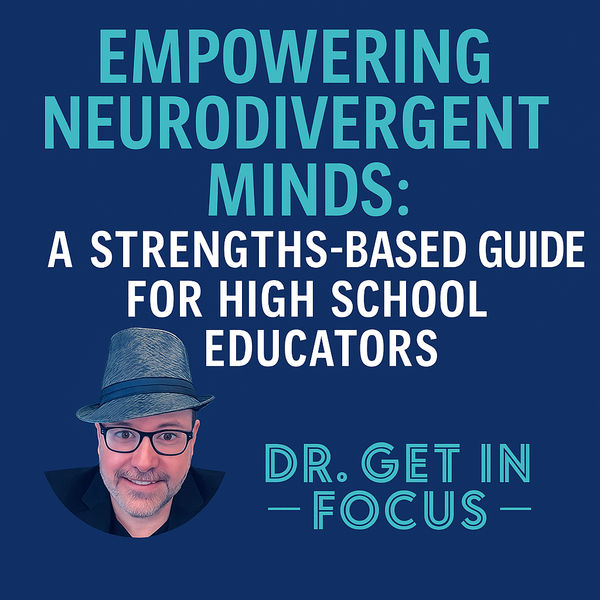
This section introduces the shift from the traditional “deficit model” to a strengths-based approach. Educators will learn to recognize ADHD as a natural variation in brain wiring, focusing on student strengths like creativity, hyperfocus, and resilience rather than limitations
Explore how traditional education can unintentionally harm students with ADHD through criticism, misunderstanding, and deficit-based labels. Learn to identify signs of educational trauma and apply strategies to validate experiences, rebuild trust, and create safe, supportive learning environments
Discover practical tools for creating inclusive classrooms. From visual schedules and movement breaks to differentiated instruction and flexible seating, this section equips educators with concrete strategies to help ADHD students engage, succeed, and feel supported
Build student success by strengthening executive functions like task initiation, working memory, and time management. This section provides structured, step-by-step protocols educators can implement immediately to boost academic performance and student confidence
Learn how to support students in managing big emotions and advocating for their needs. Educators will gain strategies for teaching emotional regulation, building coping toolkits, and guiding students in communicating effectively and confidently with teachers and peers
Take engagement to the next level with innovative approaches such as gamified learning, storytelling, and affirming communication. This section shows educators how to cultivate strengths, spark motivation, and transform the classroom into a space where neurodivergent students thrive
Move from theory to practice with a toolkit of resources. Explore executive function scaffolding tools, authentic assessment methods, and the power of humor in learning. This section also highlights professional development opportunities and collaborative support networks
Move from theory to practice with a toolkit of resources. Explore executive function scaffolding tools, authentic assessment methods, and the power of humor in learning. This section also highlights professional development opportunities and collaborative support networks
Working with Neurodivergent Students can be, how you say, "Challenging"! So how can you keep yourself from getting to frustrated?
Here you will find your success journal to take the internal journey to make you an even more effective educator than you already are! h, and there is also your final exam!
Here are references:
Open to exploring other methods of teaching neuroodivergent students

It Stands for "Accelerated Dynamic Hyper-Drive!


.png?updatedAt=1721224061345)
Already a member? login to access
This course includes


.png?updatedAt=1721224061282)

.png?updatedAt=1721224205728)





An author’s note is a short, high-value space where writers explain factual choices, context, or source use, helping rea...

Becoming a working actor means building a sustainable freelance career through training, audition prep, professional mat...

Cult manipulation is a pattern of psychological control, not just unusual beliefs. It works by narrowing a person's choi...

Empowerment and authentic self meditation helps people steady attention, regulate stress, and reconnect with inner value...

Empowering women to their elevated selves means helping women strengthen self-worth, emotional regulation, boundaries, a...

Superhero confidence is practical self-efficacy: the belief that you can act, recover, and grow under pressure. It devel...
Choose the free account that best fits how you want to use TGD.
Choose the free account that best fits how you want to use TGD.